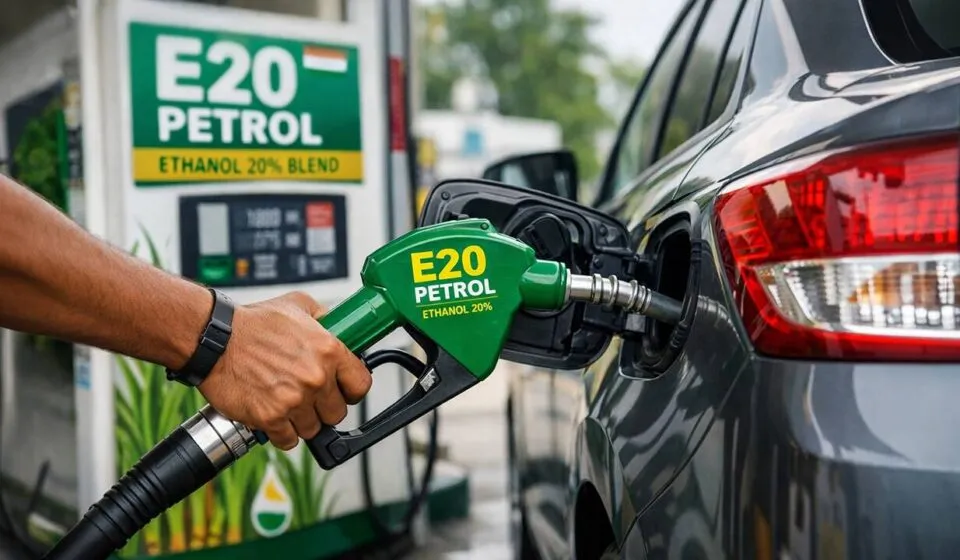
E20 Petrol: Unpacking the Government’s Stance on Ethanol Blended Fuel’s Impact on Mileage, Engines, and India’s Energy Future

E20 Petrol: Unpacking the Government’s Stance on Ethanol Blended Fuel’s Impact on Mileage, Engines, and India’s Energy Future
India is on a determined path towards energy self-reliance and environmental sustainability, with the widespread adoption of ethanol-blended petrol being a cornerstone of this strategy. As the nation transitions to E20 fuel – a blend of 20% ethanol and 80% petrol – a myriad of questions and concerns have naturally emerged among consumers. To address these, the Union Minister for Road Transport and Highways, Nitin Gadkari, recently provided crucial clarifications, particularly regarding the fuel’s impact on vehicle performance and efficiency. His statements aim to demystify common perceptions and offer a clear government perspective on this transformative energy initiative.
The move to E20 is not merely an incremental step but a significant leap in India’s energy policy, designed to mitigate dependence on imported crude oil, bolster agricultural incomes, and reduce carbon emissions. However, for the average motorist, practical implications such as fuel economy and engine longevity remain paramount. The government’s proactive communication seeks to equip the public with accurate information, fostering confidence in the E20 rollout.
Understanding India’s Ethanol Blending Program (EBP)
India’s journey towards ethanol blending began with a strategic vision to enhance energy security and address environmental challenges. The Ethanol Blending Program (EBP) was initiated with the primary objective of reducing the country’s reliance on fossil fuels, which account for a substantial portion of its import bill. By blending ethanol, a domestically produced biofuel, with petrol, India aims to conserve foreign exchange and promote a circular economy centered around its agricultural sector.
The program has seen a gradual increase in blending targets, moving from E5 (5% ethanol) to E10 (10% ethanol), which is now widely available across the country. The ambitious goal is to achieve E20 nationwide by 2025, a target that was initially set for 2030 but has been advanced due to impressive progress and strategic imperative. This accelerated timeline underscores the government’s commitment to the program’s success and its potential benefits.
- Energy Security: Reduces reliance on volatile global crude oil markets.
- Economic Benefits: Boosts the agricultural sector by providing a new revenue stream for farmers and sugar mills.
- Environmental Impact: Contributes to a cleaner environment by reducing greenhouse gas emissions.
- Technological Advancement: Encourages automotive manufacturers to develop E20-compliant and flex-fuel vehicles.
Addressing the Fuel Efficiency Question Head-On
One of the most pressing concerns for consumers revolves around the potential impact of E20 fuel on vehicle mileage. Minister Gadkari directly addressed this, stating that petrol blended with 20% ethanol might lead to a modest reduction in fuel efficiency, ranging from 2% to 6%. He emphasized that this variation is largely dependent on the specific type and age of the vehicle.
The rationale behind this slight reduction stems from the inherent properties of ethanol. Ethanol has a lower energy density compared to pure petrol. This means that a given volume of ethanol contains less energy than the same volume of petrol, requiring a slightly larger quantity of the ethanol-petrol blend to achieve the same amount of power. However, modern vehicle engines, particularly those designed to be E20-compliant or flex-fuel vehicles, are engineered to optimize combustion for these blends, thereby minimizing the efficiency delta.
For older vehicles not specifically designed for higher ethanol blends, the impact might be at the higher end of the stated range. It is crucial for vehicle owners to consult their manufacturer’s guidelines or authorized service centers to understand their vehicle’s compatibility and any potential adjustments required.
Beyond Mileage: Debunking Other Common Myths about E20
The transition to E20 has naturally sparked a broader discussion encompassing various aspects beyond just fuel efficiency. The government’s clarifications extend to several other common claims and concerns, aiming to provide a holistic understanding of E20’s implications.
Engine Compatibility and Potential Damage
A significant concern among vehicle owners is whether E20 fuel could damage their engines, especially older models. The government’s stance is that E20-compliant vehicles, which are increasingly being rolled out by manufacturers, are specifically designed to handle the higher ethanol content. These vehicles feature upgraded materials for fuel lines, seals, and other components that come into contact with the fuel, ensuring resistance to ethanol’s corrosive properties.
For older vehicles not certified for E20, there is a legitimate concern. Ethanol can be corrosive to certain older materials like rubber and plastics used in fuel systems. Prolonged use of E20 in non-compliant vehicles could potentially lead to material degradation, fuel leakage, and engine issues. Vehicle owners with older models are advised to exercise caution and consult with their vehicle manufacturers or service professionals regarding compatibility and potential modifications, if any are available.
Impact on Vehicle Performance
Beyond fuel efficiency, some consumers worry about a noticeable drop in vehicle performance, such as acceleration or power output. For E20-compliant vehicles, the impact on performance is generally negligible. Engine control units (ECUs) in modern vehicles are calibrated to adjust fuel delivery and ignition timing to optimize performance with ethanol blends. While ethanol does have a lower energy density, its higher octane rating can sometimes offer minor performance benefits, particularly in higher compression engines.
Any perceived difference in performance for compliant vehicles is likely to be marginal and within the normal operating parameters. For non-compliant older vehicles, consistent use of E20 could potentially lead to suboptimal performance due to uncalibrated fuel delivery systems and material issues.
Environmental Benefits of E20
One of the strongest arguments for E20 is its environmental advantage. Ethanol is a cleaner-burning fuel compared to conventional petrol. Blending it with petrol significantly reduces tailpipe emissions of harmful pollutants such as carbon monoxide, hydrocarbons, and nitrogen oxides. Furthermore, ethanol derived from biomass is considered carbon-neutral on a lifecycle basis, as the carbon dioxide released during combustion is offset by the CO2 absorbed by the plants during their growth.
The widespread adoption of E20 is expected to play a crucial role in India’s efforts to combat air pollution, particularly in urban centers, and contribute to its climate change commitments under international agreements.
Cost Implications for Consumers
While there might be a slight dip in fuel efficiency, the cost implications for consumers are multifaceted. Ethanol is generally cheaper to produce domestically than importing crude oil. This cost advantage, combined with government subsidies and policies promoting ethanol production, could potentially translate into more stable or even lower prices for E20 fuel compared to pure petrol over time. Therefore, the slight reduction in mileage might be offset by a lower per-liter cost of the fuel, making it a cost-neutral or even beneficial proposition for consumers in the long run.
Availability and Infrastructure Readiness
The government is actively working on expanding the infrastructure required for E20 fuel distribution. This includes upgrading existing fuel pumps and establishing new ones capable of dispensing E20. The rollout is being implemented in phases, with E20 already available in several cities and states. The aim is to ensure a smooth and widespread transition, minimizing inconvenience for consumers.
Challenges include ensuring adequate ethanol production capacity, efficient logistics for transportation, and upgrading retail outlets. However, the government’s aggressive targets and collaborative efforts with the oil marketing companies and ethanol producers indicate a strong commitment to overcoming these hurdles.
The ‘Food vs. Fuel’ Debate
Concerns have been raised globally about diverting food crops for fuel production, potentially impacting food security. In India, the government has adopted a diversified approach to ethanol sourcing. While sugarcane molasses remain a primary source, there’s a growing emphasis on using surplus rice, maize, and damaged food grains for ethanol production. Furthermore, significant investments are being made in second-generation ethanol technologies, which utilize agricultural waste and cellulosic biomass, thereby mitigating the ‘food vs. fuel’ dilemma and promoting sustainable ethanol production without compromising food security.
The Road Ahead: Government’s Vision for E20
The government’s vision for E20 is deeply integrated into India’s broader economic and environmental agenda. It represents a strategic move to insulate the country from global energy price volatility, create new economic opportunities in rural areas, and significantly reduce its carbon footprint. Minister Gadkari’s recent statements are part of a continuous effort to foster transparency and build public trust in this crucial national initiative.
The success of the E20 program hinges not only on policy implementation and infrastructure development but also on public awareness and acceptance. By addressing common myths and providing factual clarity, the government aims to empower consumers to make informed decisions and embrace E20 as a vital component of India’s sustainable future. The collaborative efforts of policymakers, automotive manufacturers, and fuel distributors are paving the way for a greener, more self-reliant India.
Conclusion
India’s transition to E20 petrol is a bold and strategic move with far-reaching benefits for energy security, the economy, and the environment. While the government acknowledges a potential marginal reduction in fuel efficiency for some vehicles, this trade-off is presented against a backdrop of significant national advantages. With ongoing advancements in vehicle technology, robust infrastructure development, and transparent communication, the E20 program is poised to be a cornerstone of India’s journey towards a sustainable and self-reliant energy future.