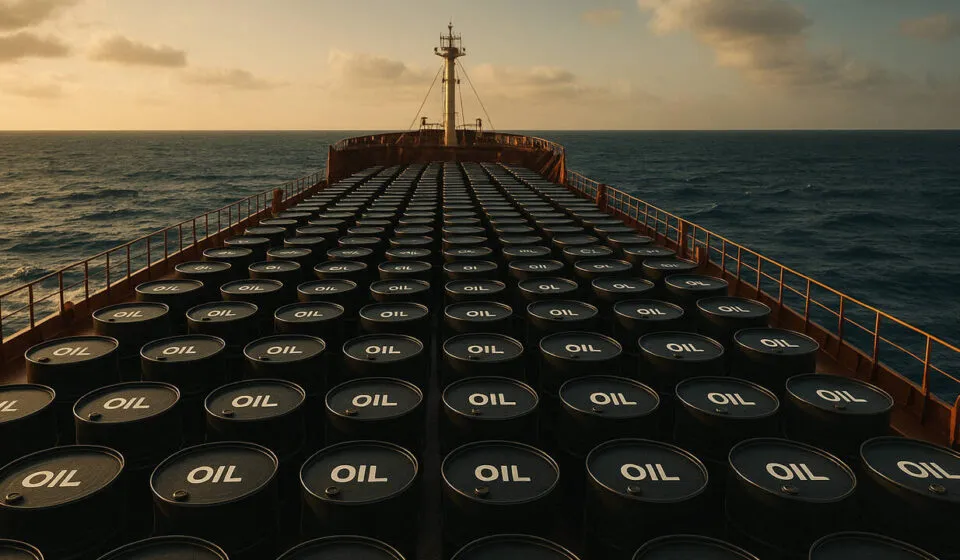

The Shifting Tides of India’s Energy Sourcing
India, a rapidly growing economic powerhouse and the world’s third-largest crude oil importer, is on the cusp of a significant shift in its energy procurement strategy. Projections indicate that the nation’s crude oil imports from Russia could reach an unprecedented 3 million barrels per day (bpd), setting a new record. This potential surge is not merely a matter of economics but is deeply intertwined with the complex tapestry of global geopolitics, supply chain resilience, and India’s overarching energy security objectives.
For decades, India’s energy landscape was predominantly shaped by its reliance on Middle Eastern suppliers, a geographical proximity that offered logistical advantages. However, the international sanctions imposed on Russia following its actions in Ukraine fundamentally altered global oil trade flows. Russian crude, previously a marginal supplier to India, became a highly attractive option due to substantial discounts, prompting a strategic reorientation in India’s import portfolio.
Geopolitical Chokepoints and Supply Chain Resilience
The global oil market is perpetually susceptible to geopolitical tremors, and recent events have underscored the fragility of established shipping routes. The Red Sea, a vital artery for international maritime trade, has experienced significant disruptions, leading to increased shipping costs, longer transit times around the Cape of Good Hope, and heightened insurance premiums. These challenges compel nations like India to re-evaluate their supply chains and seek alternative, more secure pathways for their energy needs.
Another critical chokepoint is the Strait of Hormuz, through which a substantial portion of the world’s seaborne oil passes. Any instability in this region has immediate and far-reaching consequences for global energy markets. Against this backdrop, strategic infrastructure, such as Saudi Arabia’s East-West Pipeline, also known as the Yanbu pipeline, emerges as an indispensable asset.
The Strategic Importance of the Yanbu Pipeline
The Saudi East-West (Yanbu) pipeline plays a pivotal role in mitigating risks associated with disruptions in the Persian Gulf and Red Sea. This pipeline offers a crucial alternative route, allowing crude oil from Saudi Arabia’s eastern oil fields to be transported directly to the Red Sea coast at Yanbu, thereby bypassing the Strait of Hormuz. In the current volatile environment, this capability provides an important supply cushion for Indian refiners.
- Bypassing Chokepoints: The pipeline offers a direct route to the Red Sea, circumventing both the Strait of Hormuz and the potentially volatile waters of the southern Red Sea.
- Supply Cushion: It has recently been supplying approximately 300,000-500,000 barrels per day (kbd) of crude, providing a stable and reliable source that can be rerouted to meet demand.
- Mitigating Red Sea Risks: If shipping through the Red Sea remains unaffected from its northern parts, crude can be loaded at Yanbu and shipped to India, offering a degree of insulation from disruptions further south.
The continued, unimpeded operation of this pipeline is a key factor enabling India to maintain flexibility in its procurement strategies, even as it eyes a significant increase in Russian imports.
The Economic Imperative: Why Russian Crude?
The primary driver behind India’s escalating imports of Russian crude is undeniable: economics. Following Western sanctions, Russian oil became available at significant discounts compared to traditional benchmarks. For a nation with massive energy demands and a keen focus on managing inflation, securing crude at competitive prices is a strategic imperative.
This shift has allowed Indian refiners to optimize their feedstock costs, translating into potential savings for the economy. Furthermore, India’s move to diversify its energy basket is a long-term strategy aimed at reducing over-reliance on any single region or supplier, thereby enhancing its energy security and geopolitical leverage.
Adapting to New Trade Dynamics
The increased reliance on Russian oil has necessitated adaptations in India’s logistics and shipping infrastructure. Indian refiners, both public and private, have demonstrated remarkable agility in establishing new trade relationships, securing vessels, and managing payment mechanisms to facilitate these large-volume imports. This adaptability underscores India’s commitment to ensuring a steady and affordable supply of energy for its burgeoning industrial and consumer needs.
India’s Energy Security: A Pragmatic Approach
India’s energy policy is characterized by a pragmatic and national-interest-first approach. The country’s leaders have consistently emphasized the need for stable, affordable, and diversified energy sources to fuel its economic growth and uplift its population. The decision to ramp up Russian oil imports, despite geopolitical pressures, aligns with this core philosophy.
This strategy involves a delicate balancing act: maintaining strong diplomatic ties with traditional Middle Eastern partners while simultaneously exploring new opportunities that offer economic advantages and enhance supply security. India’s strategic petroleum reserves and its pursuit of long-term supply agreements further fortify its position against global energy shocks.
Potential Challenges and the Road Ahead
While the prospect of record Russian crude imports offers significant economic benefits, it is not without potential challenges. Concerns around secondary sanctions, though largely navigated by India so far, remain a background consideration. The inherent volatility of geopolitical situations, particularly in the Middle East, means that any supply route, no matter how robust, can face unforeseen disruptions.
Looking ahead, the global oil market will continue to be influenced by a myriad of factors, including OPEC+ production decisions, global demand fluctuations, and the ongoing energy transition. India’s ability to maintain its pragmatic approach, adapt to evolving market dynamics, and continue to diversify its energy sources will be crucial for its sustained economic progress.
Conclusion
India’s potential to import a record 3 million barrels per day of Russian crude oil marks a significant chapter in its energy journey. This strategic pivot is a testament to India’s pragmatic energy policy, driven by the dual imperatives of economic growth and energy security amidst a turbulent global landscape. Supported by crucial infrastructure like Saudi Arabia’s Yanbu pipeline, which offers a vital supply buffer against Red Sea disruptions, India is demonstrating its capacity to navigate complex geopolitical currents and secure its energy future. The coming months will reveal the full extent of this shift and its long-term implications for global oil trade and India’s position within it.