PM Surya Sarovar Yojana: India Launches ₹5,070 Crore Floating Solar Initiative for Green Energy Future

India Embraces Floating Solar with Landmark ₹5,070 Crore Scheme
In a significant stride towards bolstering its renewable energy portfolio and addressing growing energy demands, the Indian Cabinet has given its nod to the ‘PM Surya Sarovar Yojana’. This ambitious scheme, backed by an outlay of ₹5,070 crore, is specifically designed to accelerate the development of floating solar power projects across the nation over the next five years. The initiative underscores India’s commitment to sustainable development, aiming to harness the vast potential of its water bodies for clean energy generation.
The PM Surya Sarovar Yojana represents a strategic pivot towards innovative solar solutions, offering financial support of up to ₹1 crore per megawatt (MW) for eligible projects. This substantial backing is expected to catalyze investment, reduce project costs, and encourage both public and private sector participation in the burgeoning floating solar sector. With land scarcity posing a persistent challenge for large-scale ground-mounted solar installations, the adoption of floating solar technology on reservoirs, lakes, and other water bodies presents a pragmatic and environmentally conscious alternative.
Unpacking the PM Surya Sarovar Yojana: Objectives and Outlay
The newly approved scheme is poised to be a cornerstone of India’s green energy transition for the foreseeable future. Spanning a period of five years, the ₹5,070 crore allocation is intended to provide critical financial incentives and support mechanisms that will drive the establishment of numerous floating solar power plants. The primary objective is to make floating solar more economically viable and attractive for developers, thereby expanding India’s overall solar capacity.
- Financial Support: The provision of up to ₹1 crore per MW acts as a crucial viability gap funding mechanism, helping to bridge the cost difference between floating solar and more conventional energy sources, and compensating for the initial higher capital expenditure associated with this nascent technology.
- Duration: A five-year implementation timeline provides a clear roadmap for project development, allowing for phased execution and consistent policy support.
- Total Outlay: The ₹5,070 crore budget reflects a serious governmental commitment to scaling up floating solar capabilities, potentially enabling thousands of megawatts of new capacity, depending on actual project costs and the extent of support utilized per MW.
- Strategic Focus: By specifically targeting floating solar, the scheme aims to unlock new avenues for solar deployment, particularly in regions where land acquisition for traditional solar farms is challenging or environmentally sensitive.
This initiative is not merely about adding capacity; it’s about fostering an ecosystem for advanced renewable energy technologies, driving innovation, and creating new opportunities for employment and economic growth within the green energy sector.
The Rise of Floating Solar Technology: Advantages and Innovation
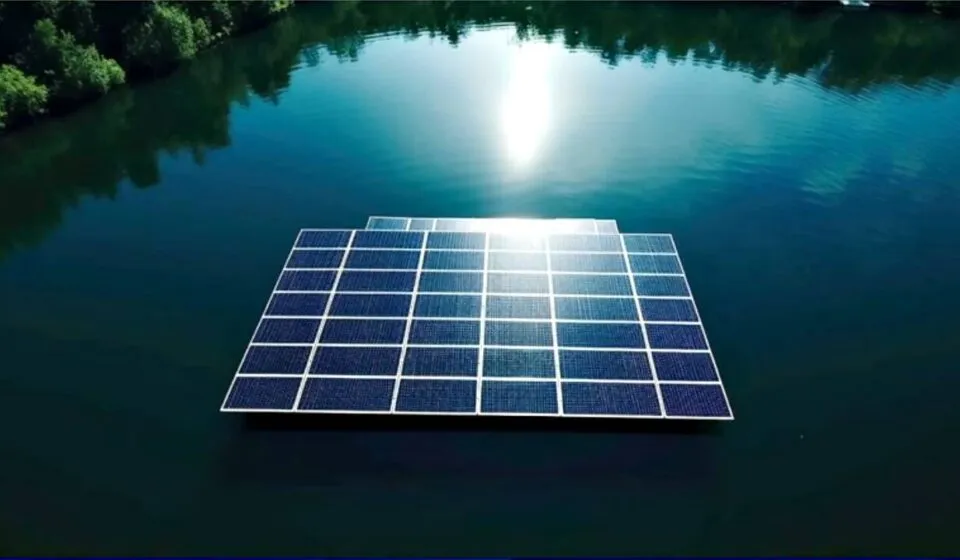
Floating solar photovoltaic (FSPV) technology involves deploying solar panels on the surface of water bodies instead of land. While still a relatively new concept compared to ground-mounted or rooftop solar, FSPV is gaining rapid traction globally due to its distinct advantages, many of which are particularly relevant to India’s context.
Key Benefits of Floating Solar:
- Optimized Land Use: This is perhaps the most compelling advantage, especially for densely populated countries like India. FSPV utilizes existing water bodies – reservoirs, lakes, irrigation ponds, and even wastewater treatment lagoons – freeing up valuable land that can be used for agriculture, housing, or conservation.
- Increased Efficiency: The cooling effect of the water beneath the panels helps to lower their operating temperature. Solar panels perform more efficiently at cooler temperatures, leading to a higher energy yield compared to ground-mounted systems in hot climates.
- Reduced Water Evaporation: The presence of solar panels covering the water surface can significantly reduce water evaporation, a critical benefit in water-stressed regions. This helps conserve precious freshwater resources, which can be particularly impactful for reservoirs supplying drinking water or irrigation.
- Improved Water Quality: By blocking sunlight, floating solar installations can help suppress algae growth in water bodies, potentially improving water quality and reducing the need for chemical treatments.
- Easier Installation and Decommissioning: In many cases, floating structures can be assembled on shore and then towed into position, simplifying the installation process. Decommissioning can also be less disruptive than land-based projects.
- Reduced Dust Accumulation: Water surfaces tend to have less dust than arid land, which can lead to cleaner panels and reduced maintenance requirements for cleaning.
Despite these benefits, challenges such as anchoring, cable management, environmental impact assessment on aquatic ecosystems, and higher initial costs have historically slowed widespread adoption. The PM Surya Sarovar Yojana aims to directly address the financial hurdle, making the technology more accessible.
India’s Renewable Energy Ambition and Floating Solar’s Role
India has emerged as a global leader in renewable energy deployment, setting ambitious targets to combat climate change and ensure energy security for its rapidly growing population. The country has committed to achieving 500 gigawatts (GW) of non-fossil fuel electricity capacity by 2030 and aims for net-zero emissions by 2070. Solar energy, in particular, is a cornerstone of this strategy.
Currently, India boasts a significant installed solar capacity, primarily dominated by ground-mounted and rooftop installations. However, the sheer scale of future capacity additions required necessitates exploring all viable avenues. This is where floating solar becomes indispensable. India has an abundance of large reservoirs and other water bodies associated with hydroelectric projects, irrigation systems, and industrial operations – all prime candidates for FSPV deployment.
Integrating floating solar with existing hydropower projects, for instance, offers synergistic benefits. The water infrastructure is already in place, and the grid connection is readily available. Furthermore, the combination can help manage peak demand more effectively, as hydropower can be ramped up quickly when solar generation fluctuates.
The PM Surya Sarovar Yojana aligns perfectly with national initiatives like the National Solar Mission and the broader push for ‘Atmanirbhar Bharat’ (Self-Reliant India) by promoting indigenous manufacturing and technological expertise in the renewable energy sector. It reflects a forward-thinking approach to diversify the energy mix and build a resilient, sustainable energy infrastructure.
Economic and Environmental Impact of the Scheme
The approval of the PM Surya Sarovar Yojana is expected to generate multifaceted positive impacts across economic, social, and environmental spheres.
Economic Benefits:
- Investment Mobilization: The ₹5,070 crore outlay and per-MW support will attract significant private investment into the floating solar sector, stimulating economic activity.
- Job Creation: The development, installation, operation, and maintenance of floating solar projects will create numerous direct and indirect job opportunities, from engineering and manufacturing to skilled labor.
- Technological Advancement: Increased deployment will foster research and development in floating solar technology, potentially leading to cost reductions and efficiency improvements.
- Energy Security: Expanding domestic renewable energy production reduces reliance on fossil fuel imports, contributing to greater energy security and stability.
Environmental Benefits:
- Carbon Emission Reduction: Generating electricity from solar power significantly reduces greenhouse gas emissions, helping India meet its climate change commitments and improve air quality.
- Water Conservation: The reduced evaporation from covered water bodies is a critical environmental benefit, particularly in regions facing water scarcity.
- Minimal Land Footprint: Utilizing water bodies prevents the diversion of agricultural land or ecologically sensitive areas for energy projects.
- Biodiversity Preservation: Careful planning can ensure that floating solar projects are deployed in a manner that minimizes disruption to aquatic ecosystems.
By investing in floating solar, India is not just adding megawatts but also investing in a greener, more sustainable future for its citizens and the planet.
Challenges and Future Outlook
While the PM Surya Sarovar Yojana marks a significant step, the path to widespread floating solar adoption is not without its challenges. Technical hurdles related to mooring systems, module durability in a marine environment, and the need for specialized operations and maintenance expertise will need to be addressed. Environmental impact assessments will be crucial to ensure that projects do not adversely affect aquatic biodiversity or water quality. Furthermore, effective collaboration between central, state, and local authorities will be vital for streamlined project approvals and implementation.
Despite these challenges, the outlook for floating solar in India is overwhelmingly positive. The government’s clear policy direction and financial commitment through schemes like the PM Surya Sarovar Yojana provide a strong foundation. As technology matures, costs decline, and operational experience grows, floating solar is poised to become an increasingly important component of India’s renewable energy mix. The scheme is expected to not only accelerate India’s journey towards its ambitious clean energy targets but also position the country as a leader in innovative solar deployment strategies.
Conclusion
The approval of the PM Surya Sarovar Yojana is a landmark decision that underscores India’s proactive approach to combating climate change and ensuring energy independence. By committing ₹5,070 crore over five years to support floating solar projects, the government is not only diversifying its renewable energy portfolio but also championing an innovative solution to the perennial challenge of land scarcity. This initiative promises to deliver substantial economic and environmental benefits, propelling India further along its path to a sustainable and green energy future, illuminating its reservoirs with the power of the sun.