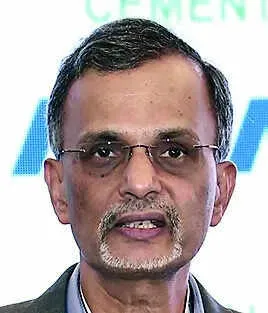
The Economic Paradox: Why ‘Free’ Public Policies Carry a Steep Price Tag, According to India’s Chief Economic Advisor

The Illusion of Generosity: Unpacking the Costs of ‘Free’ Public Policies
In the realm of public discourse and political campaigning, few words hold as much allure and promise as "free." From free electricity to loan waivers and various subsidies, the concept of providing essential goods or services without direct cost to the recipient often resonates deeply with electorates. However, this seemingly benevolent approach to public welfare comes with a profound economic caveat, a truth succinctly articulated by India’s Chief Economic Advisor, V. Anantha Nageswaran: "Free is the most expensive word in public policy." This statement cuts to the heart of a critical economic debate, highlighting that what appears to be a gift often masks significant, long-term costs that can strain national finances, distort markets, and ultimately impede sustainable development.
Nageswaran’s observation underscores a fundamental principle of economics: there is no such thing as a free lunch. Every resource, every service, every benefit provided by the government has an underlying cost, whether it’s direct expenditure from the public exchequer or an indirect impact on the broader economy. Understanding these hidden costs is crucial for informed policymaking and ensuring fiscal responsibility.
The Paradox of "Free": Unveiling Hidden Economic Burdens
The immediate appeal of "freebies" lies in their perceived benefit to the populace, particularly vulnerable sections of society. However, the economic reality is far more complex. When a government offers something "free," it means that the cost is simply shifted elsewhere, often to taxpayers, future generations, or through inflationary pressures. This re-allocation of resources carries several significant implications:
- Opportunity Cost: Perhaps the most fundamental economic principle at play is opportunity cost. Funds spent on providing "free" services cannot be used for other vital investments. For instance, money allocated for universal free electricity might otherwise have been invested in upgrading public education, building critical infrastructure like roads and hospitals, or fostering research and development. The forgone benefits of these alternative investments represent a significant, often overlooked, cost.
- Fiscal Strain and Debt Accumulation: Governments primarily fund these programs through taxation or borrowing. Excessive reliance on "freebies" can lead to unsustainable fiscal deficits, pushing national debt to alarming levels. This debt eventually needs to be serviced, diverting a larger portion of the budget towards interest payments rather than productive expenditure. Higher government borrowing can also "crowd out" private investment by increasing interest rates, making it more expensive for businesses to borrow and expand.
- Inflationary Pressures: When governments inject large sums of money into the economy through populist schemes without a corresponding increase in productivity or supply, it can lead to an excess of money chasing too few goods. This imbalance often results in inflation, eroding the purchasing power of citizens, especially those with fixed incomes, effectively making everything else more expensive.
The cumulative effect of these factors can be a long-term drag on economic growth and stability, undermining the very prosperity that such policies ostensibly aim to create.
Distorting Markets and Incentives
Beyond the direct fiscal impact, "free" policies can also have profound effects on market dynamics and individual behavior. By artificially lowering the price of goods or services to zero, governments can inadvertently distort market signals and create perverse incentives:
- Inefficient Resource Use: When something is free, consumers often have little incentive to conserve it. For example, free water or electricity can lead to wasteful consumption patterns, stressing natural resources and infrastructure beyond sustainable limits. This contrasts sharply with market-based pricing, which encourages efficient use and innovation.
- Disincentivizing Investment and Innovation: Industries that compete with "free" government provisions may struggle to survive or attract investment. If a private utility cannot compete with free government-provided electricity, for instance, it may cease operations, leading to a loss of jobs and a lack of private sector innovation in that area. Over time, this can hinder the development of efficient and competitive markets.
- Dependency and Reduced Accountability: A culture of "freebies" can foster dependency on state handouts, potentially reducing individual initiative and entrepreneurial spirit. It can also make governments less accountable for the quality and efficiency of services, as there is no direct payment mechanism for citizens to signal dissatisfaction.
- Impact on Tax Compliance: If citizens perceive that their tax contributions are primarily funding unsustainable giveaways rather than essential public services or productive investments, it can erode trust in the tax system and potentially lead to reduced compliance.
These distortions can create a vicious cycle, where short-term political gains from "free" offerings come at the expense of long-term economic health and robust market functioning.
The Long-Term Societal Burden and Intergenerational Equity
The true cost of "free" policies is often borne by future generations. When current governments incur significant debt to fund populist schemes, it is the children and grandchildren who will inherit the burden of repayment. This raises critical questions about intergenerational equity – whether the current generation is consuming resources and accumulating debt at the expense of future generations’ opportunities and living standards.
Furthermore, diverting funds towards "freebies" can mean underinvestment in crucial long-term public goods and services that drive sustainable development. These include:
- Education: Investing in quality education and skill development is vital for a competitive workforce and future economic growth.
- Healthcare: Robust public health infrastructure is essential for societal well-being and productivity.
- Infrastructure: Roads, ports, digital connectivity, and energy grids are the backbone of economic activity.
- Research and Development: Innovation is key to solving future challenges and creating new industries.
When these foundational areas are starved of funds, the long-term potential of a nation is significantly diminished, leading to a less prosperous future for all.
Balancing Welfare and Fiscal Prudence: The Policymaker’s Dilemma
It is important to distinguish between legitimate social safety nets and unsustainable populist "freebies." Welfare programs designed to provide targeted support to the genuinely needy, such as unemployment benefits, food assistance for the impoverished, or scholarships for deserving students, play a crucial role in mitigating inequality and ensuring a basic standard of living. These are often seen as investments in human capital and social stability.
The challenge for policymakers lies in striking a delicate balance. How can governments provide necessary support to citizens without creating fiscal unsustainability or market distortions? This requires:
- Targeted Interventions: Focusing aid on those who truly need it, rather than universal giveaways that benefit even the affluent.
- Transparent Cost-Benefit Analysis: Thoroughly evaluating the long-term economic and social costs and benefits of any proposed "free" scheme.
- Fiscal Discipline: Adhering to responsible budgeting practices and prioritizing productive investments over consumption-oriented handouts.
- Public Education: Fostering a greater understanding among the public about the true costs and implications of "free" policies.
Nageswaran’s statement serves as a potent reminder for governments worldwide to critically assess the implications of their public policy choices. While the immediate gratification of providing something "free" can be politically appealing, the long-term economic consequences can be far-reaching and detrimental.
Conclusion: Towards Sustainable and Responsible Governance
The pronouncement that "free is the most expensive word in public policy" from a seasoned economic advisor like V. Anantha Nageswaran is a crucial call for introspection. It challenges political narratives that often prioritize short-term electoral gains over long-term economic stability. For nations striving for sustainable growth and prosperity, understanding and internalizing this economic reality is paramount. Policymakers must move beyond the superficial allure of "free" and engage in transparent, fiscally responsible governance that invests in the future rather than mortgaging it. Only through such prudent decision-making can economies build resilience, foster genuine development, and ensure a better quality of life for all citizens, today and for generations to come.