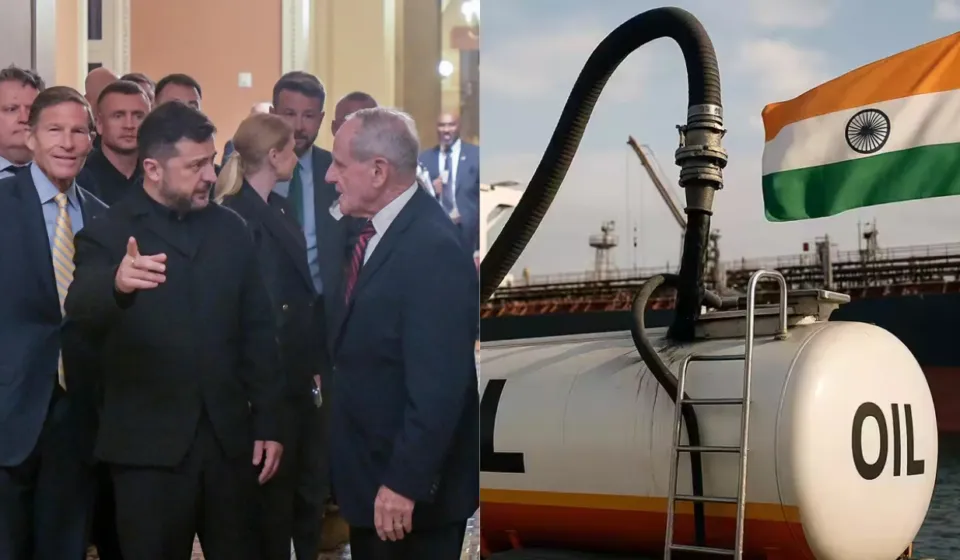
US Senate Advances Russia Sanctions Bill: Potential Tariffs Loom for India and Global Energy Markets

Introduction: A New Chapter in Sanctions Diplomacy
The United States Senate has taken a significant step towards escalating economic pressure on Russia, overwhelmingly advancing a bipartisan bill designed to broaden the scope of existing sanctions. This pivotal legislation not only fortifies measures against Moscow but also introduces a novel and potentially contentious power: granting the President the authority to penalize major international buyers of Russian energy exports. With countries like India and China identified as leading purchasers of Russian crude oil and natural gas, the bill signals a potential paradigm shift in global energy trade dynamics and international relations. Furthermore, the legislation extends the Iran Sanctions Act through 2031, underscoring a broader strategic commitment to economic coercion against nations deemed adversarial to U.S. interests.
The bill’s progression through the Senate marks a critical juncture, as it seeks to address perceived loopholes in the current sanctions regime that have allowed Russia to continue funding its military operations. By targeting secondary actors, the U.S. aims to choke off vital revenue streams that have sustained Russia’s economy despite widespread international condemnation and existing restrictions. This move is poised to send ripples across global energy markets, compelling nations heavily reliant on Russian resources to reconsider their supply chains and diplomatic postures.
Deepening the Economic Pressure on Russia
Since the full-scale invasion of Ukraine in February 2022, the United States, alongside its allies, has implemented a series of unprecedented sanctions against Russia. These measures have targeted key sectors of the Russian economy, including its financial institutions, technology, and oligarchs, with the primary objective of diminishing Moscow’s capacity to wage war. However, despite these efforts, Russia has demonstrated a remarkable resilience, largely due to its ability to redirect energy exports to new markets, particularly in Asia.
The newly advanced Senate bill seeks to counter this adaptability by introducing a more aggressive and far-reaching mechanism. Instead of solely focusing on Russian entities, the legislation empowers the U.S. President to impose secondary sanctions on countries or entities that engage in significant transactions involving Russian energy. This represents a substantial escalation, moving beyond direct sanctions to influence the behavior of third-party nations. The underlying rationale is clear: if Russia’s traditional European markets have been curtailed, then the next logical step is to disrupt its alternative revenue sources, thereby increasing the economic cost of its actions in Ukraine.
A New Tool: Sanctioning Major Energy Buyers
The core of this legislation’s innovative approach lies in its provision to grant the President discretionary power to impose tariffs or other punitive measures on nations or entities deemed to be significant buyers of Russian crude oil and natural gas. This authority is a powerful diplomatic and economic tool, designed to create a deterrent effect and force a reevaluation of energy procurement strategies globally. The bill does not automatically trigger tariffs but provides the executive branch with the flexibility to apply pressure as deemed necessary, allowing for a nuanced response based on geopolitical developments and bilateral relations.
The implementation of such secondary sanctions could manifest in various forms, including the imposition of tariffs on goods imported from the targeted country, restrictions on access to the U.S. financial system, or even limitations on foreign aid. The objective is to make continued large-scale purchases of Russian energy economically or politically untenable for these nations. This strategy acknowledges that while direct sanctions have impacted Russia, the continuous flow of revenue from its energy exports—a cornerstone of its economy—remains a critical vulnerability that the U.S. seeks to exploit more aggressively.
India and China: Key Players in the Global Energy Landscape
Among the nations most prominently mentioned as potential targets of this new legislative power are India and China. Both countries have significantly increased their imports of Russian crude oil and natural gas since the onset of the Ukraine conflict, capitalizing on discounted prices offered by Moscow as it sought new buyers in the wake of Western sanctions. For India, a rapidly growing economy with substantial energy demands, Russian oil has provided a crucial and cost-effective supply, helping to manage inflation and support industrial growth.
Similarly, China, the world’s largest energy consumer, has deepened its energy ties with Russia, aligning with its broader strategic partnership. These increased imports have been vital for both nations in securing their energy needs, often at prices below global market rates, which has offered considerable economic advantages. However, this reliance now places them in a precarious position. Should the U.S. choose to exercise its new sanctioning authority, India and China could face difficult choices between maintaining access to discounted Russian energy and avoiding punitive measures from the United States, a major trading partner and geopolitical player. The potential for 100% tariffs, as some discussions have suggested, could drastically alter the economic calculus for these nations, forcing them to seek alternative, potentially more expensive, energy sources or face significant economic repercussions in their trade relations with the U.S.
The Broader Geopolitical Chessboard
The advancement of this sanctions bill is not merely an economic maneuver; it is a significant move on the broader geopolitical chessboard. From the U.S. perspective, it aims to reinforce the global norm against military aggression and to isolate Russia further on the international stage. However, it also carries the risk of straining relationships with key strategic partners and non-aligned nations, particularly those with complex geopolitical interests and significant energy needs.
The bill underscores the ongoing challenge for the U.S. in balancing its foreign policy objectives—supporting Ukraine and punishing Russia—with the need to maintain stable relations with countries that have not fully aligned with Western policies. For India, a burgeoning global power that values its strategic autonomy and maintains robust defense ties with both the U.S. and Russia, the bill presents a delicate diplomatic tightrope walk. Similarly, for China, already engaged in multifaceted economic and geopolitical competition with the U.S., the sanctions threat adds another layer of complexity to an already strained relationship. The international community will be closely watching how these powers navigate the potential imposition of secondary sanctions and what implications this will have for the existing global order and the formation of new economic alliances.
Extending the Reach: The Iran Sanctions Act
An additional, yet significant, component of this bipartisan legislation is the extension of the Iran Sanctions Act (ISA) through the year 2031. The ISA, first enacted in 1996, authorizes the U.S. President to impose sanctions on companies and individuals who invest in Iran’s energy sector or help Iran develop weapons of mass destruction. Its extension signals a continued commitment by the U.S. Congress to exert economic pressure on Iran, irrespective of ongoing diplomatic efforts or the status of the Iran nuclear deal (JCPOA).
This inclusion reinforces a consistent U.S. foreign policy stance of using economic tools to curb the nuclear ambitions and regional influence of countries deemed state sponsors of terrorism or nuclear proliferators. While separate from the Russia sanctions, its presence in the same bill highlights a broader legislative intent to strengthen U.S. leverage against multiple geopolitical adversaries. The extension of ISA will likely be viewed by Iran as a continuation of hostile policy, potentially complicating future negotiations and further entrenching the existing standoff.
Potential Economic and Diplomatic Ramifications
The potential economic and diplomatic ramifications of this bill are substantial and multifaceted. On the economic front, if secondary sanctions are broadly applied, they could lead to significant disruptions in global energy markets. Countries like India and China might be forced to diversify their energy imports rapidly, potentially leading to increased demand for non-Russian oil and gas and a corresponding rise in global energy prices. This could, in turn, contribute to inflationary pressures worldwide and impact global economic stability.
Diplomatically, the bill could strain relationships between the U.S. and nations that feel unduly pressured to abandon their economic interests or established trade partnerships. While the U.S. aims to isolate Russia, a heavy-handed approach could inadvertently push some countries closer to Russia or other non-Western blocs, fostering resentment and potentially undermining broader U.S. foreign policy objectives. The delicate balance between enforcing sanctions and maintaining alliances will be a critical test for U.S. diplomacy. Furthermore, the precedent set by targeting secondary energy buyers could lead to a more fragmented global trading system, where geopolitics increasingly dictates economic choices, potentially to the detriment of free trade principles.
Conclusion: A Defining Moment for Global Sanctions Policy
The U.S. Senate’s advancement of this comprehensive sanctions bill marks a defining moment in global economic statecraft. By empowering the President to target major buyers of Russian energy and extending the Iran Sanctions Act, the U.S. is signaling a more aggressive and expansive approach to using economic leverage as a tool of foreign policy. This legislation carries profound implications, particularly for nations like India and China, which face the complex task of balancing their energy security and economic interests with the imperative of navigating an increasingly polarized international environment.
As the bill moves closer to becoming law, the world watches to see how these new powers will be exercised and what the ultimate impact will be on global energy markets, international trade relationships, and the intricate web of geopolitical alliances. The coming months will undoubtedly test the resilience of global supply chains, the strength of diplomatic ties, and the resolve of nations to adapt to a new era of intensified economic pressure and strategic competition.