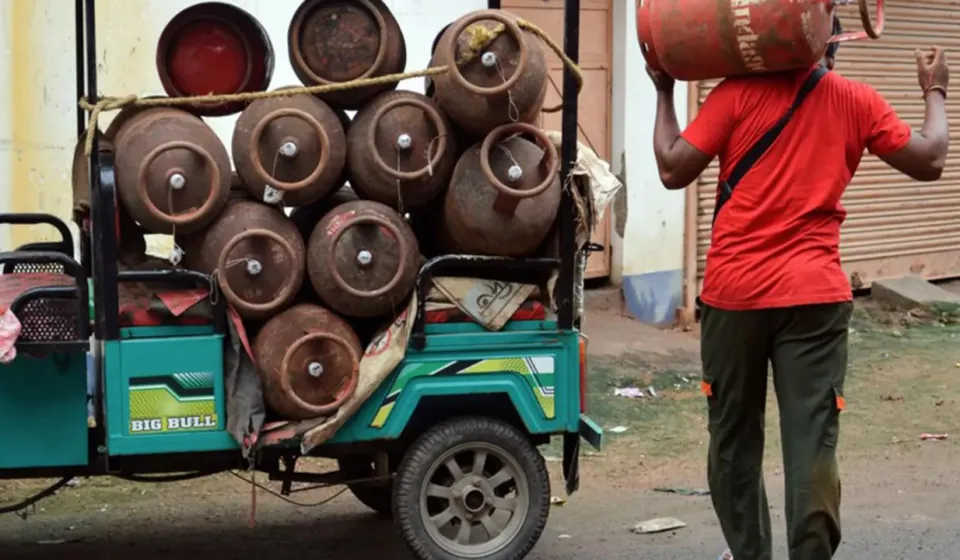

Commercial LPG Prices Drop for Second Consecutive Month, Offering Relief to Businesses
In a significant development for India’s commercial sector, the prices of 19-kilogram commercial Liquefied Petroleum Gas (LPG) cylinders have been reduced across the country, effective August 1st. This marks the second consecutive month of price cuts, providing much-needed relief to a wide array of businesses that rely heavily on this essential fuel. While commercial LPG cylinders have seen substantial reductions, prices for domestic LPG cylinders remain unchanged, highlighting a differentiated approach to energy pricing.
The latest revision translates into a notable decrease of over Rs 200 for a 19 kg commercial cylinder in major metropolitan areas. Specifically, businesses in Kolkata will benefit from a Rs 209 reduction, while those in the capital city of Delhi will see their costs drop by Rs 202. This downward trend in commercial fuel prices is anticipated to ease operational burdens for numerous enterprises, potentially stimulating economic activity and offering a buffer against inflationary pressures.
Significant Relief for Businesses as Commercial LPG Prices Fall Again
The recent price adjustment is a welcome respite for commercial establishments, which have been navigating fluctuating energy costs. The 19 kg commercial LPG cylinder is the workhorse for sectors ranging from hospitality to small-scale manufacturing, making its price a critical component of operational expenditure. The cumulative effect of two consecutive monthly reductions can lead to tangible savings for businesses.
For instance, a 19 kg commercial LPG cylinder in Delhi, which saw a Rs 202 reduction, now carries a revised price. Similarly, in Kolkata, the Rs 209 cut brings down the effective cost for businesses. These changes directly impact the bottom line of establishments such as restaurants, hotels, catering services, and various industrial units, allowing them greater flexibility in their budgeting and pricing strategies.
The consistent decline suggests a response to underlying market dynamics, possibly including changes in international crude oil prices or the strength of the Indian Rupee against the US Dollar. For businesses, this translates to improved cost efficiencies, which can be reinvested, passed on to consumers in the form of more competitive pricing, or used to bolster profit margins.
Understanding India’s LPG Pricing Mechanism
The pricing of LPG in India is a complex mechanism influenced by a confluence of global and domestic factors. Primarily, international benchmarks dictate the base price. The Saudi Aramco Contract Price (CP), which is the benchmark for LPG in the international market, plays a crucial role. Any fluctuations in this global price directly impact what Indian oil marketing companies (OMCs) pay for imports.
Beyond the international price, several other components contribute to the final retail price:
- Exchange Rate: As India imports a significant portion of its LPG, the Rupee-Dollar exchange rate is a key determinant. A weaker Rupee makes imports more expensive, and vice-versa.
- Freight Charges: Costs associated with transporting LPG from international sources to Indian ports.
- Customs Duties: Taxes levied on imported LPG.
- Marketing Margins: The profit margins for oil marketing companies.
- Dealer Commission: The commission paid to distributors and retailers.
- State-Specific Taxes: Value Added Tax (VAT) and other local levies imposed by individual state governments. These taxes can vary significantly, leading to different prices across states.
Public Sector Undertakings (PSUs) like Indian Oil Corporation (IOCL), Bharat Petroleum Corporation Limited (BPCL), and Hindustan Petroleum Corporation Limited (HPCL) revise LPG prices on the first day of every month, based on these dynamic factors. This monthly revision ensures that prices reflect current market realities.
Who Benefits? Impact on Key Sectors
The reduction in commercial LPG prices brings a wave of positive implications for several sectors that are integral to India’s economy. The primary beneficiaries include:
- Hospitality Industry: Restaurants, cafes, hotels, and catering businesses are major consumers of commercial LPG. Lower fuel costs reduce their operational overheads, potentially allowing them to offer more competitive menu prices or enhance service quality.
- Small and Medium Enterprises (SMEs): Many small manufacturing units, bakeries, confectioneries, and street food vendors rely on commercial LPG for their daily operations. The price cut provides crucial support to these businesses, which often operate on thin margins.
- Educational Institutions and Hostels: Large-scale kitchens in schools, colleges, and residential hostels also utilize commercial LPG. Reduced costs can help manage their budgets more effectively.
- Industrial Canteens: Corporate and factory canteens that cater to a large workforce will also see a decrease in their cooking fuel expenses.
This relief can translate into several positive outcomes. For some businesses, it might mean improved profitability, allowing for investment in expansion or upgrades. For others, it could enable them to absorb other rising costs without passing them on to consumers, thereby contributing to price stability in their respective markets. The cumulative effect can foster a more conducive environment for business growth and job creation, especially within the MSME sector, which is a significant employer in India.
A Tale of Two Cylinders: Commercial vs. Domestic LPG
It is crucial to distinguish between the pricing strategies for commercial and domestic LPG cylinders. While commercial cylinders have seen successive price reductions, the prices for 14.2 kg domestic LPG cylinders have remained unchanged during this period. This divergence is a deliberate policy choice by the government.
Domestic LPG is considered an essential household commodity, and its pricing is often subject to government intervention and subsidies to ensure affordability for the general populace. The government aims to shield household budgets from the volatility of international energy markets, particularly for vulnerable sections of society. Subsidies, though adjusted over time, play a role in keeping domestic prices relatively stable compared to their market-linked commercial counterparts.
Commercial LPG, on the other hand, is primarily used by businesses for profit-generating activities. Therefore, its pricing is more directly tied to market forces, with less government intervention in the form of subsidies. This allows for quicker adjustments to global price movements, as seen in the recent reductions. The stability in domestic LPG prices underscores the government’s commitment to household welfare, even as it allows market dynamics to influence commercial fuel costs.
Broader Economic Implications and Future Outlook
The consistent decline in commercial LPG prices carries broader economic implications for India. In an economy constantly battling inflationary pressures, a reduction in input costs for businesses, particularly those in the food and hospitality sectors, can contribute to easing overall inflation. This relief for businesses can help stabilize the cost of goods and services, benefiting consumers indirectly.
Furthermore, lower energy costs can act as a catalyst for economic growth. By reducing the financial burden on enterprises, it frees up capital that can be utilized for expansion, innovation, or job creation. This is particularly vital for the recovery and sustained growth of the MSME sector, which forms the backbone of India’s economy.
Looking ahead, the trajectory of commercial LPG prices will continue to be shaped by global factors. International crude oil prices, geopolitical stability, and the global supply-demand balance for LPG will remain critical determinants. Domestically, the Rupee’s performance against the Dollar will also play a significant role. Businesses will closely monitor these indicators, hoping for continued stability or further reductions to sustain their operational efficiencies.
Conclusion
The recent and consecutive price cuts for commercial LPG cylinders provide a tangible boost to India’s business community. From bustling restaurants to essential small industries, enterprises across various sectors stand to benefit from reduced operational costs. This move, while leaving domestic LPG prices untouched, reflects a nuanced approach to energy pricing, aiming to balance economic growth with household welfare. As businesses adapt to these new price points, the hope is for a ripple effect that fosters greater stability, competitiveness, and ultimately, contributes positively to the nation’s economic landscape.