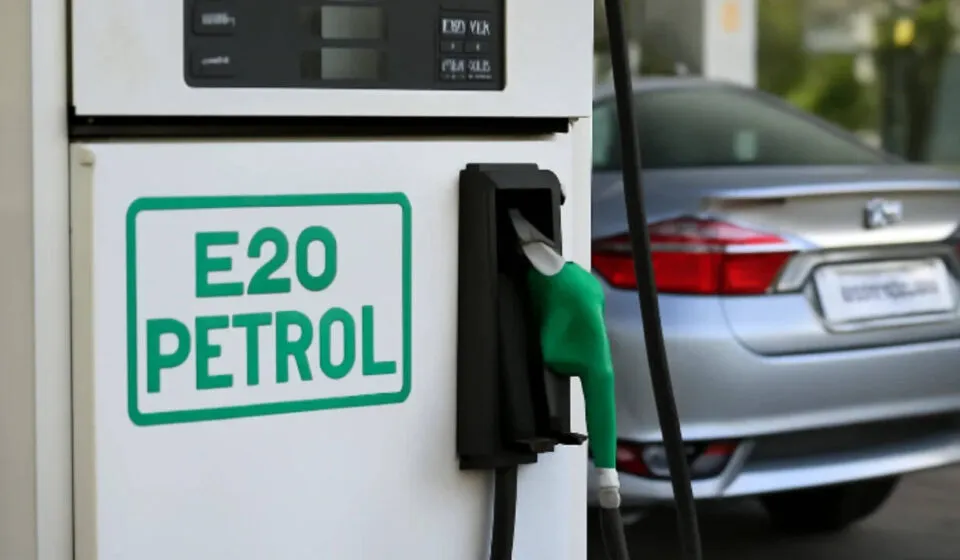

The Rise of E20 Fuel and Emerging Efficiency Questions
India’s ambitious drive towards energy self-reliance and environmental sustainability has seen the accelerated rollout of E20 fuel, a blend of 20% ethanol and 80% petrol. This initiative, aimed at reducing the nation’s hefty crude oil import bill, cutting carbon emissions, and boosting the agricultural sector, marks a significant shift in the country’s fuel landscape. However, as E20 becomes more widely available, a pertinent question has emerged among consumers: what impact will it have on vehicle mileage?
Recent statements from key government ministries have brought this question to the forefront, albeit with slightly varying figures. Both the Road Transport Ministry and the Petroleum Ministry have acknowledged a potential reduction in fuel efficiency for vehicles running on E20, particularly older models. While the precise percentage differs between the two ministerial pronouncements, a common thread emphasizes that factors beyond the fuel blend, such as driving habits and vehicle maintenance, play a crucial role in overall fuel economy.
Understanding E20 Fuel and Its Purpose
E20 fuel is a higher ethanol blend compared to the previously common E10 (10% ethanol) or pure petrol. Ethanol, an alcohol derived primarily from sugarcane and other agricultural products in India, is an oxygenate, meaning it contains oxygen. When blended with petrol, it contributes to more complete combustion, which can reduce certain pollutants like carbon monoxide and unburnt hydrocarbons. The government’s push for E20 is multi-faceted:
- Reducing Import Dependency: By increasing ethanol blending, India aims to decrease its reliance on imported crude oil, saving valuable foreign exchange.
- Environmental Benefits: Ethanol blends are generally considered to produce fewer greenhouse gas emissions compared to pure petrol, contributing to cleaner air.
- Boosting Agriculture: The demand for ethanol creates a new market for sugarcane and other feedstock, providing economic benefits to farmers.
- Energy Security: Domestically produced ethanol enhances the nation’s energy security by diversifying fuel sources.
The roadmap for ethanol blending has been aggressive, with the government targeting a nationwide rollout of E20 by 2025, a goal initially set for 2030 but advanced due to rapid progress.
Conflicting Figures: A Closer Look at Mileage Estimates
The core of the current discussion revolves around the specific figures provided by different government bodies regarding the potential mileage reduction with E20 fuel. These variations, while seemingly minor, can create confusion among motorists.
- Road Transport Ministry’s Stance: This ministry has indicated a potential decrease in fuel efficiency ranging from 2% to 6%. This broader range might account for various vehicle types, ages, and engine technologies.
- Petroleum Ministry’s Assessment: In contrast, the Petroleum Ministry has suggested a general reduction of approximately 3% to 5%. This slightly narrower range aligns closely with industry estimates that often cite ethanol’s lower energy density as the primary reason for a mileage dip.
Why the discrepancy? It’s important to understand that fuel efficiency can be influenced by a multitude of variables. Different ministries might base their estimates on different datasets, testing methodologies, or target vehicle populations. The Road Transport Ministry, for instance, might consider a wider spectrum of vehicles, including older, less compatible models, which could explain its broader 2-6% range. The Petroleum Ministry’s figures might stem from more controlled tests on average vehicles or a focus on the inherent energy density difference between ethanol and petrol.
The Science Behind the Mileage Drop
The primary reason for a potential reduction in mileage when using E20 fuel lies in ethanol’s energy density. Ethanol contains roughly 33% less energy per unit volume than petrol. While modern engines can compensate for this to some extent through advanced fuel injection and engine management systems, a higher proportion of ethanol in the blend means that more fuel volume is required to achieve the same amount of energy output. Therefore, a slight decrease in kilometers per liter (KMPL) is a widely acknowledged characteristic of higher ethanol blends.
Beyond the Fuel: The Role of Driving Habits and Vehicle Maintenance
Crucially, both ministries have underscored that the actual fuel economy experienced by a motorist is not solely dependent on the E20 blend. Driving habits and the state of vehicle maintenance are equally, if not more, significant factors. This point is critical for consumers to understand, as it offers avenues for mitigating any potential mileage reduction.
Key Factors Influating Fuel Economy:
- Aggressive Driving: Rapid acceleration, harsh braking, and high speeds significantly reduce fuel efficiency. Smooth, consistent driving with gradual acceleration and anticipation of traffic conditions can save a substantial amount of fuel.
- Tire Pressure: Underinflated tires increase rolling resistance, forcing the engine to work harder and consume more fuel. Maintaining correct tire pressure, as specified by the manufacturer, is a simple yet effective way to improve mileage.
- Regular Vehicle Servicing: A well-maintained engine runs more efficiently. This includes regular oil changes, air filter replacement, spark plug checks, and ensuring the engine’s tuning is optimal. Clogged air filters, for example, can restrict airflow, leading to increased fuel consumption.
- Engine Idling: Unnecessary idling, such as waiting with the engine running, consumes fuel without covering any distance. Switching off the engine for longer stops can conserve fuel.
- Load and Aerodynamics: Carrying unnecessary weight in the vehicle or having external roof racks when not in use can increase fuel consumption due by requiring more power to move or increasing aerodynamic drag.
- Traffic Conditions: Stop-and-go traffic inherently reduces mileage compared to smooth highway driving, regardless of the fuel type.
For vehicles that are not E20 compliant, the use of E20 fuel can also lead to long-term issues beyond just mileage, potentially affecting fuel lines, seals, and other engine components. However, newer vehicles launched since 2023 are generally designed to be E20 compatible.
Implications for Indian Motorists
For the average Indian motorist, a 2-6% drop in mileage, while seemingly small, can translate into tangible financial implications over time, especially for those with high daily commutes. For instance, if a vehicle typically gives 15 km/l, a 5% drop would mean it now gives 14.25 km/l. Over thousands of kilometers, this adds up to increased fuel expenditure.
However, the broader context of E20’s benefits – energy security, environmental protection, and support for the agricultural sector – remains a key consideration for policymakers. Consumers are encouraged to adopt fuel-efficient driving practices and ensure their vehicles are well-maintained to offset any potential mileage reduction from E20.
For owners of older vehicles, consulting with their manufacturer or a qualified mechanic about E20 compatibility is advisable. While E20 is being rolled out, E10 or unblended petrol options might still be available in some regions, offering a choice for those concerned about older vehicle performance.
Conclusion: Navigating the E20 Transition
The transition to E20 fuel is a strategic move for India, promising significant benefits on multiple fronts. While government ministries have presented slightly varied estimates regarding a potential mileage reduction, the consensus points to a modest decrease, particularly for certain vehicle types. Crucially, both ministries agree that driving behavior and vehicle upkeep are paramount in determining actual fuel efficiency.
As E20 becomes the new norm, motorists are empowered to mitigate any potential impact on their wallets by embracing eco-driving techniques and adhering to a strict vehicle maintenance schedule. Understanding the nuances of E20 and its interaction with vehicle performance will enable Indian consumers to adapt smoothly to this evolving fuel landscape, contributing to the nation’s energy goals while managing their personal costs effectively.