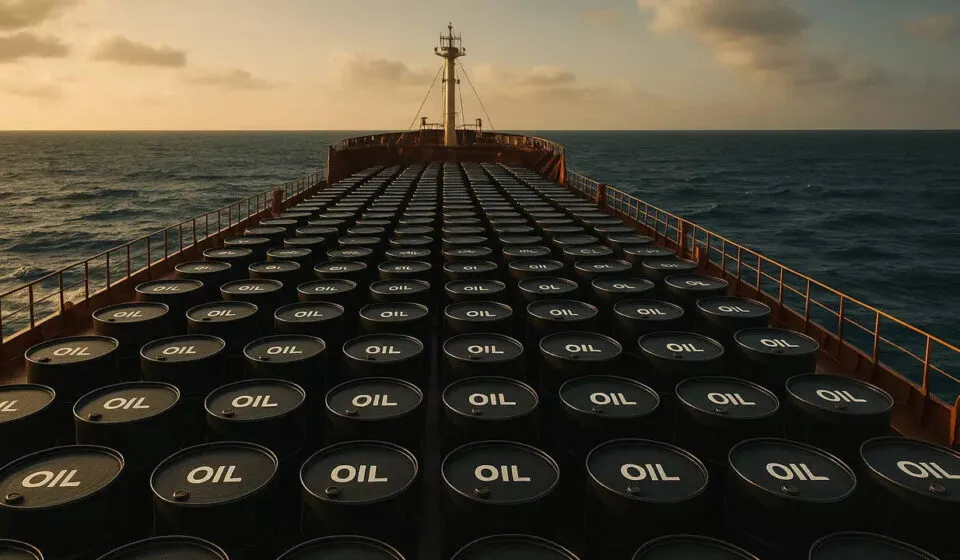
Global Oil Prices Retreat Despite Escalating Middle East Tensions: Supply Routes Hold Strong

Global Oil Prices Retreat Despite Escalating Middle East Tensions: Supply Routes Hold Strong
Global crude oil markets experienced a notable retreat in prices on Thursday, a day after a significant rally, as market participants reassessed the immediate threat to supply amidst escalating geopolitical tensions in the Middle East. Despite a marked intensification of military activities and heightened concerns over shipping security in vital waterways, evidence of continued oil flow out of the region appears to have tempered investor anxieties, suggesting a degree of resilience in global supply chains. This paradoxical movement underscores the complex interplay between geopolitical risk, actual supply disruptions, and market sentiment in the volatile energy sector.
Market Reaction to Geopolitical Unrest
The preceding day had witnessed a sharp uptick in crude oil benchmarks, driven by fears that the widening conflict in the Middle East could disrupt critical oil export routes. Such “fear premiums” are a common occurrence in times of geopolitical instability, reflecting the market’s anticipation of potential supply shortages. However, Thursday’s trading saw these gains largely erased. This reversal can be attributed to a closer examination of real-time shipping data and intelligence, which indicated that, contrary to initial anxieties, crude oil and refined products continued to find their way out of the Middle Eastern production hubs and into the global market. The sustained flow suggests that while risks remain elevated, immediate, widespread supply interruptions have not materialized, leading traders to unwind some of their speculative positions.
Resilient Supply Chains: Navigating Chokepoints
The Middle East remains the world’s most critical region for oil production and export, with a substantial portion of global crude passing through its narrow maritime chokepoints. The Strait of Hormuz, linking the Persian Gulf with the Arabian Sea, is arguably the most strategically important, through which roughly a fifth of the world’s total oil consumption transits daily. While some discussions point to “Hormuz alternatives,” the broader resilience of “routes out of the region” is multifaceted:
- Diverse Shipping Routes: Beyond the primary chokepoints, oil can be routed through various corridors, and shipping companies often adapt their itineraries based on perceived risk.
- Strategic Petroleum Reserves: Major consuming nations maintain strategic petroleum reserves, which can be tapped in times of severe disruption, providing a buffer against immediate shocks.
- Pipeline Infrastructure: Several countries in the region, particularly Saudi Arabia, possess extensive pipeline networks that can bypass certain maritime chokepoints, offering alternative export avenues directly to the Red Sea or other coastal terminals. These pipelines serve as crucial safety valves, reducing sole reliance on vulnerable sea lanes.
- Adaptability of Global Fleet: The global tanker fleet is vast and adaptable. While rerouting can add time and cost, it is often feasible, preventing complete cessation of supply.
The continued flow of oil, as evidenced by shipping activity, indicates that either existing routes are proving more robust than anticipated under pressure, or alternative pathways are being effectively utilized to maintain continuity of supply. This adaptability is key to understanding the market’s tempered reaction.
Escalating Military Actions and Regional Dynamics
The backdrop to these market movements is a deeply complex and increasingly volatile geopolitical landscape. Recent reports indicate an intensification of military actions, notably “US-Saudi strikes targeting Iran-backed forces in Iraq.” These strikes are a significant development, highlighting the ongoing proxy conflicts and power struggles that characterize the region.
Iran’s influence in Iraq, through various Shia militia groups, has been a source of tension for years. These groups, often referred to as “Iran-backed forces,” have been implicated in attacks against US personnel and interests in Iraq and Syria. The involvement of Saudi Arabia in these strikes, alongside the United States, underscores a broader regional alignment aimed at countering perceived Iranian expansionism and destabilizing activities. Such actions carry the risk of further escalation, potentially drawing more actors into the conflict and increasing the likelihood of direct confrontation, which could, in turn, pose a more direct threat to oil infrastructure and shipping.
The Red Sea and the Houthi Threat: A New Front
Adding another layer of complexity to the regional security calculus is the situation in the Red Sea. The RSS feed explicitly mentions that “Saudi Arabia is reportedly assembling a coalition to protect Red Sea shipping from Houthi attacks.” The Red Sea is a vital artery for global trade, leading to the Suez Canal, one of the world’s busiest maritime passages.
The Houthi movement, an Iran-aligned group controlling large parts of Yemen, has intensified its attacks on commercial shipping in the Red Sea. These attacks, often carried out using drones and missiles, are ostensibly in solidarity with Palestinians amid the conflict in Gaza, but also serve to project Houthi power and disrupt international commerce.
The implications of these attacks are profound:
- Disruption to Global Trade: Rerouting vessels around the Cape of Good Hope adds significant time and cost to journeys between Asia and Europe, impacting supply chains for a wide array of goods, not just oil.
- Increased Insurance Premiums: War risk insurance premiums for vessels transiting the Red Sea have skyrocketed, making the route less economically viable for many shipping companies.
- Escalation Risk: The attacks invite military responses from international naval forces, raising the specter of broader naval conflict in a critical maritime zone.
Saudi Arabia’s initiative to form a coalition signals a serious commitment to safeguarding this crucial waterway. As a major oil exporter and a nation deeply invested in regional stability, Saudi Arabia views the Houthi actions as a direct threat to its economic interests and the broader security of the region. This coalition could involve naval escorts, enhanced surveillance, and potentially more direct action against Houthi launch sites, further complicating the regional security environment.
Broader Implications for Global Energy Security
The current confluence of events in the Middle East—sustained oil flow despite conflict, targeted military strikes, and threats to vital shipping lanes—presents a nuanced challenge to global energy security. While immediate supply disruptions have been mitigated by resilient supply chains, the prolonged state of elevated risk has several implications:
- Higher Operating Costs: Even if oil continues to flow, increased insurance, security measures, and potential rerouting add to the cost of transportation, which can ultimately be passed on to consumers.
- Investment Uncertainty: Persistent instability can deter long-term investment in the region’s energy infrastructure, potentially impacting future supply capabilities.
- Diversification Imperative: The situation reinforces the strategic imperative for consuming nations to diversify their energy sources and supply routes, and to maintain robust strategic reserves.
- Geopolitical Realignment: The formation of coalitions and the nature of military responses could lead to new alliances and rivalries, reshaping the geopolitical map of the Middle East and beyond.
The global energy market remains highly sensitive to events in the Middle East. While current mechanisms appear to be absorbing the immediate shocks, the underlying tensions and the potential for rapid escalation mean that volatility is likely to persist.
Conclusion
The global crude oil market’s recent retreat in prices, despite a surge in Middle Eastern tensions, illustrates a complex dynamic where the immediate perception of sustained supply has momentarily outweighed escalating geopolitical risks. While military actions intensify in Iraq and Saudi Arabia mobilizes to counter Houthi threats in the Red Sea, the continued flow of oil through various routes has provided a temporary calming effect on prices. However, the region remains a powder keg, with ongoing proxy conflicts and threats to vital shipping lanes posing significant long-term challenges to global energy security. The delicate balance between political instability and the resilience of supply chains will continue to dictate the trajectory of oil prices and the broader energy market in the foreseeable future.