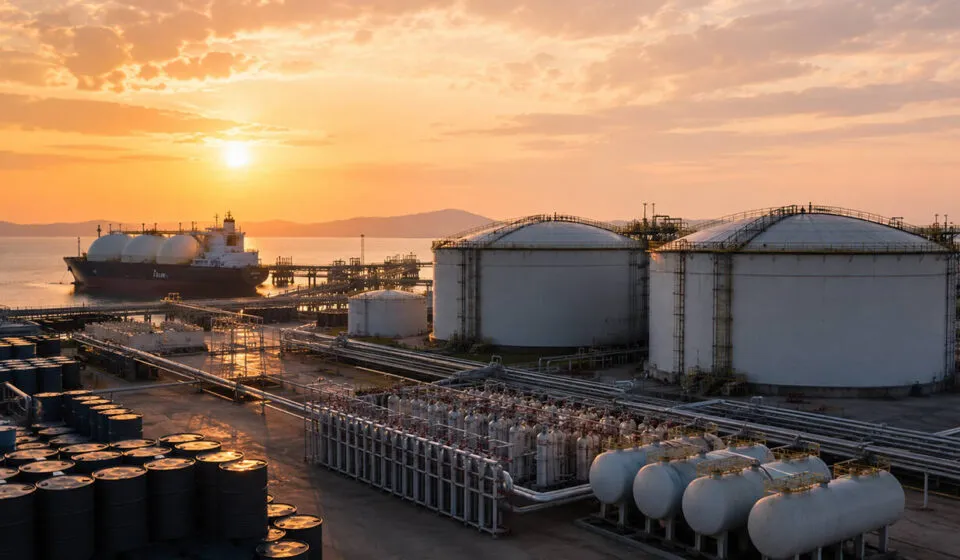

The Imperative of Energy Security for India
As one of the world’s fastest-growing major economies, India’s insatiable demand for energy continues to climb, underpinning its industrial growth, urban development, and the aspirations of its vast population. This rapid expansion, however, comes with a significant challenge: a profound reliance on imported fossil fuels. India stands as the third-largest consumer of crude oil globally, with over 85% of its crude oil requirements met through imports. This high dependency exposes the nation to the volatile dynamics of international energy markets, geopolitical disruptions, and supply chain vulnerabilities, making robust energy security a paramount national interest.
To mitigate these risks, India has embarked on an ambitious strategy to bolster its strategic energy reserves. This comprehensive approach extends beyond crude oil to include critical resources like Liquefied Petroleum Gas (LPG) and Liquefied Natural Gas (LNG), acknowledging their pivotal roles in the nation’s energy mix. The ongoing expansion of strategic petroleum reserves (SPR) capacity is a cornerstone of this strategy, aiming to provide a vital buffer against unforeseen supply shocks and price volatility, thereby safeguarding economic stability and national resilience.
Evolution of India’s Strategic Petroleum Reserves Program
India’s journey towards establishing strategic petroleum reserves gained significant momentum following the Gulf War in the early 1990s, which highlighted the severe economic repercussions of disrupted oil supplies. Recognizing the urgent need for a strategic buffer, the government initiated the creation of dedicated underground crude oil storage facilities. The Indian Strategic Petroleum Reserves Limited (ISPRL), a wholly owned subsidiary of the Oil Industry Development Board (OIDB) under the Ministry of Petroleum & Natural Gas, was established in 2004 to manage these reserves.
The first phase of India’s SPR program saw the commissioning of three underground rock cavern facilities located at:
- Visakhapatnam (Andhra Pradesh)
- Mangaluru (Karnataka)
- Padur (Karnataka)
These facilities collectively provide a storage capacity of 5.33 Million Metric Tonnes (MMT) of crude oil, offering approximately 9.5 days of India’s crude oil requirement based on current consumption rates. While a significant achievement, this initial capacity represented only a fraction of the internationally recommended 90-day reserve target, underscoring the need for further expansion.
Expanding Crude Oil Storage: A Multi-pronged Approach
The current phase of expansion, often referred to as Phase II, is designed to substantially increase India’s strategic crude oil storage capacity. Once completed, the nation’s total strategic petroleum reserves capacity is projected to reach an impressive 11.88 MMT. This significant leap will bring India considerably closer to the globally recognized benchmark of a 90-day reserve, as recommended by the International Energy Agency (IEA) for its member countries. While India is not an IEA member, it is a key partner country and adheres to many of its best practices.
A crucial component of this expansion involves the establishment of additional commercial-cum-strategic facilities. These new sites are strategically located to enhance supply chain resilience and optimize distribution. Beyond domestic storage, India is also exploring and actively pursuing international collaborations to diversify its reserve portfolio. A notable example is the ongoing partnership with the United Arab Emirates (UAE), aimed at securing an additional 30 million barrels of crude oil storage capacity. This innovative approach allows India to leverage overseas storage, potentially reducing the financial burden and land requirements associated with domestic construction, while simultaneously deepening bilateral energy ties with a key Middle Eastern producer.
The advantages of such international collaborations are manifold:
- Geographic Diversification: Reduces reliance on a single region for storage.
- Cost Efficiency: Potentially lower construction and maintenance costs compared to domestic facilities.
- Enhanced Strategic Depth: Provides additional flexibility in managing supply disruptions.
- Strengthening Diplomatic Ties: Fosters stronger relationships with energy-rich nations.
Beyond Crude: Securing LPG and LNG Supplies
While crude oil reserves are critical, India’s energy security strategy is increasingly recognizing the importance of other vital fuels, particularly Liquefied Petroleum Gas (LPG) and Liquefied Natural Gas (LNG). These fuels play indispensable roles across various sectors of the Indian economy and society.
The Importance of LPG Reserves
LPG is a cornerstone of India’s household energy consumption, particularly for cooking. Government initiatives like the Pradhan Mantri Ujjwala Yojana (PMUY) have significantly expanded access to clean cooking fuel, making LPG an essential commodity for millions of households. Disruptions in LPG supply can have immediate and widespread social and economic consequences. Therefore, establishing strategic LPG reserves is a logical extension of India’s energy security mandate, ensuring continuity of supply for domestic consumers and preventing price spikes that disproportionately affect lower-income households.
The Growing Need for LNG Reserves
LNG’s role in India’s energy landscape is rapidly expanding, driven by its cleaner burning properties compared to coal and its versatility as a fuel for power generation, industrial processes, and city gas distribution networks. As India seeks to transition towards a gas-based economy to reduce its carbon footprint, reliable LNG supply becomes paramount. Strategic LNG reserves, though technically more complex due to the cryogenic storage requirements, are becoming increasingly vital to buffer against supply chain interruptions, which could severely impact industrial output and power generation, thus hindering economic progress and environmental goals.
Geopolitical Landscape and India’s Energy Diplomacy
India’s energy security strategy operates within a complex and often volatile global geopolitical landscape. The nation’s energy diplomacy is therefore focused on diversifying its energy import sources and fostering robust partnerships with energy-producing nations across the globe. Traditionally reliant on the Middle East, India has actively sought to expand its import basket to include crude oil from regions like the United States, Russia, and various African nations. This diversification strategy aims to reduce over-reliance on any single region, thereby enhancing bargaining power and mitigating risks associated with regional instability.
Strategic partnerships, such as those with the UAE, Saudi Arabia, and the United States, are not merely transactional but are integral to India’s long-term energy security. These relationships often involve not just crude oil trade but also investments in downstream projects, technology transfer, and joint ventures in renewable energy, creating a multi-faceted energy security framework. India’s active participation in global energy forums and dialogues further underscores its commitment to collaborative solutions for global energy stability.
Economic and Environmental Considerations
The construction and maintenance of strategic energy reserves involve substantial financial investment. The costs encompass land acquisition, engineering, construction of complex underground caverns or cryogenic facilities, and the procurement and storage of the fuel itself. These significant outlays necessitate careful fiscal planning and resource allocation. However, the economic benefits of preventing supply shocks – avoiding industrial slowdowns, stabilizing consumer prices, and maintaining investor confidence – far outweigh the initial investment.
Furthermore, India’s strategic reserve strategy must be viewed within the broader context of its commitment to combating climate change and transitioning to a cleaner energy future. While fossil fuel reserves provide immediate security, India is simultaneously investing heavily in renewable energy sources like solar and wind power. The strategic reserves can be seen as a necessary bridge during this transition, ensuring energy availability and stability as the nation gradually decarbonizes its energy mix. They act as an insurance policy, allowing for a more orderly and less disruptive shift towards sustainable energy solutions without compromising immediate energy needs.
Conclusion
India’s proactive and multi-faceted approach to bolstering its strategic energy reserves is a critical endeavor for safeguarding its economic future and national security. By significantly expanding its crude oil storage capacity to 11.88 MMT, moving closer to the 90-day reserve target, and forging crucial international partnerships like the one with the UAE for 30 million barrels of crude storage, India is building a resilient defense against global energy market volatility. The growing focus on strategic reserves for LPG and LNG further demonstrates a holistic understanding of the nation’s diverse energy requirements.
This comprehensive strategy, balancing domestic capacity building with international collaboration and acknowledging the imperative of transitioning to cleaner energy, positions India more securely on the global energy stage. As the nation continues its journey of rapid development, a robust and diversified energy reserve system will remain an indispensable pillar of its progress and stability.