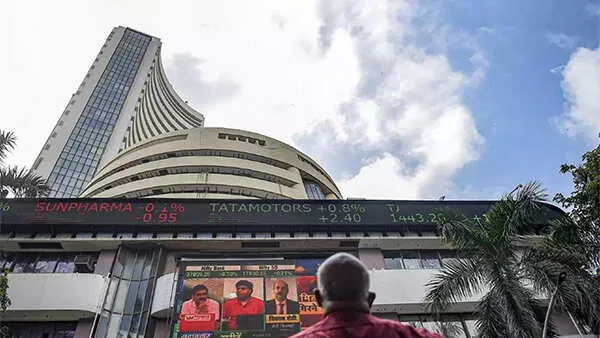

A Pivotal Shift in Market Closure
The Indian stock market is poised for a significant structural change with the introduction of a new Closing Auction Session, as indicated by recent discussions and regulatory moves. This strategic overhaul aims to redefine how daily trading sessions conclude, focusing on enhancing liquidity, streamlining the execution of substantial orders, and establishing a more accurate closing price that genuinely mirrors the collective market demand and supply dynamics. This move aligns India with global best practices, promising a more robust and transparent end-of-day trading mechanism.
For decades, the closing moments of a trading day have been critical, often characterized by a flurry of activity as investors and institutions finalize positions. However, the traditional ‘last traded price’ method for determining the official close has sometimes been susceptible to volatility and less representative of the broader market sentiment, especially when large orders are executed in rapid succession. The shift towards a structured closing auction seeks to address these inherent challenges, ushering in an era of greater predictability and fairness.
Understanding the Closing Auction Mechanism
At its core, a Closing Auction Session is a dedicated period at the end of the trading day where all orders are collected and matched simultaneously to determine a single, unified closing price for a security. Unlike continuous trading, where transactions occur throughout the day as buy and sell orders meet, the auction concentrates all end-of-day interest into a specific window, culminating in a single price point.
How it Works: A Step-by-Step Overview
- Order Collection Phase: During a predefined time window, typically a few minutes before the official market close, participants can submit, modify, or cancel orders. These orders are not immediately executed but are aggregated by the exchange’s system.
- Price Discovery Phase: The exchange’s algorithm analyzes all submitted buy and sell orders to find a price at which the maximum number of shares can be traded. This ‘equilibrium price’ represents the point where supply and demand are most balanced.
- Execution Phase: Once the optimal closing price is determined, all eligible orders are executed at this single price. This ensures that all participants who placed orders within the auction window and at the determined price receive the same execution price.
This method stands in contrast to simply taking the last traded price of the continuous trading session, which could be influenced by a single, potentially anomalous trade in the final seconds.
The Rationale: Why a Closing Auction?
The decision to implement a Closing Auction Session is underpinned by several compelling reasons aimed at strengthening market integrity and efficiency.
Concentrating Liquidity
One of the primary objectives is to concentrate liquidity at the trading day’s end. In a continuous trading environment, liquidity can sometimes become fragmented or thin in the final moments, making it challenging for large orders to be executed without significantly impacting the price. By funneling all end-of-day interest into an auction, the system pools liquidity, creating a deeper market for the closing price determination.
Smoother Execution of Large Orders
Institutional investors, mutual funds, and large portfolio managers frequently need to execute substantial orders, especially for index rebalancing or portfolio adjustments, at the end of the day. In a thinly traded environment, these large orders can cause significant price swings, leading to adverse execution. The auction mechanism provides a structured environment where these large orders can be absorbed more efficiently, minimizing market impact and ensuring fairer execution.
Generating an Accurate Closing Price
The closing price is more than just a number; it’s a crucial benchmark for valuing portfolios, calculating index performance (like the Sensex and Nifty), and settling derivatives contracts. A closing price derived from an auction, which considers the aggregated demand and supply across a defined period, is generally considered more robust and representative of the market’s true sentiment than a fleeting last-traded price.
Key Benefits for the Indian Market
The adoption of a Closing Auction Session is expected to yield several significant advantages for the Indian equity market:
- Enhanced Price Discovery: By aggregating all end-of-day demand and supply, the auction mechanism facilitates a more accurate and robust discovery of the closing price, reflecting a broader consensus.
- Reduced Volatility at Close: The structured nature of the auction can help mitigate the erratic price movements often observed in the final minutes of continuous trading, leading to a more orderly market close.
- Improved Market Efficiency: Streamlined execution for large orders reduces transaction costs and market impact for institutional participants, contributing to overall market efficiency.
- Greater Transparency and Fairness: A single, transparent closing price for all participants fosters a level playing field and enhances market integrity.
- Better Index Representation: Indices like the Nifty and Sensex rely heavily on accurate closing prices for their daily calculations. An auction-derived price provides a more reliable basis for these critical benchmarks.
- Alignment with Global Standards: Many major international exchanges already employ closing auction mechanisms, bringing India’s market infrastructure in line with global best practices.
Global Perspective: A Proven Mechanism
The concept of a closing auction is not new; it’s a well-established practice in many developed markets worldwide. Exchanges like the New York Stock Exchange (NYSE), London Stock Exchange (LSE), Euronext, and the Tokyo Stock Exchange (TSE) utilize various forms of closing auctions to manage end-of-day trading. This global adoption underscores the effectiveness and benefits of such a system in handling significant liquidity and ensuring fair price discovery at market close. India’s move in this direction, potentially by August 3, 2026, as per some reports, signifies a progressive step towards modernizing its market infrastructure.
Impact on Market Participants
The introduction of a Closing Auction Session will have varying impacts across different segments of market participants.
- Institutional Investors: These entities are likely to be major beneficiaries, as the concentrated liquidity and structured environment will facilitate smoother and more efficient execution of their large, end-of-day orders, reducing slippage and market impact.
- Retail Investors: While the core trading experience during continuous hours remains unchanged, retail investors will need to be aware of the specific timings of the auction session. Orders placed or modified during this window will be subject to the auction rules, impacting their execution price. Educational initiatives will be crucial to ensure a smooth transition.
- Derivatives Market: The accuracy of closing prices is paramount for the settlement of futures and options contracts. A more robust closing price derived from an auction will bring greater certainty and reduce settlement risks in the derivatives segment.
- Market Regulators (SEBI): The Securities and Exchange Board of India (SEBI) will play a critical role in overseeing the implementation and ensuring the smooth functioning of the new system, potentially refining rules as needed based on market feedback.
Conclusion: A Step Towards a More Mature Market
The impending implementation of a Closing Auction Session marks a significant stride in the evolution of the Indian stock market. By prioritizing concentrated liquidity, efficient large order execution, and accurate price discovery, this mechanism promises to enhance market integrity, reduce volatility, and align India’s trading infrastructure with global best practices. While any major change requires an adjustment period, the long-term benefits of a more robust, transparent, and fair end-of-day trading process are expected to bolster investor confidence and contribute to the overall maturity and resilience of the Indian financial landscape.