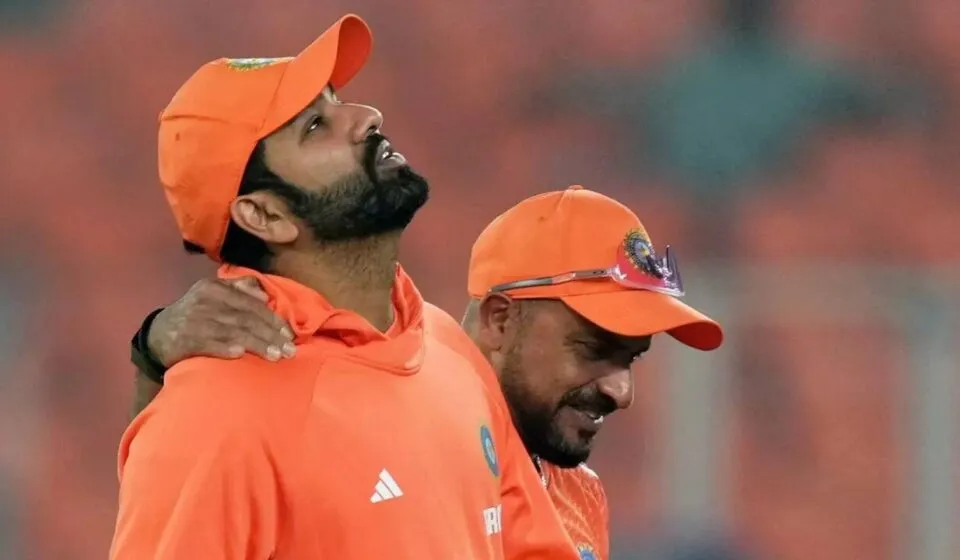

A Tribute to Excellence: Rohit Sharma’s Heartfelt Farewell
The landscape of international cricket is one of constant evolution, not just on the field with bat and ball, but also behind the scenes, where dedicated support staff work tirelessly to hone the skills of elite athletes. In a recent development that has drawn attention, T Dilip, the esteemed fielding coach for the Indian men’s cricket team, is set to conclude his tenure. His departure has prompted a wave of appreciation, most notably from India’s captain, Rohit Sharma, who lauded Dilip’s contributions, stating, “You created magic.” This commendation underscores the significant impact Dilip had on the team’s fielding standards and the strong rapport he built with the players during his time.
Fielding, once considered a secondary aspect of the game, has transformed into a critical match-winning discipline in modern cricket. The difference between victory and defeat often hinges on a spectacular catch, a precise run-out, or an athletic save at the boundary. Coaches like T Dilip are instrumental in cultivating this culture of excellence, pushing players to achieve peak physical and technical prowess in the field.
The Unsung Hero: T Dilip’s Impact on Indian Fielding
T Dilip’s journey with the Indian team began in 2021, taking over from R Sridhar. From the outset, Dilip brought a fresh perspective and an intense focus on elevating the team’s fielding benchmarks. His tenure saw a concerted effort to improve various facets of fielding, including close-in catching, ground fielding efficiency, and the accuracy of throws. Under his guidance, the Indian team often demonstrated flashes of brilliance, showcasing improved athleticism and commitment in crucial moments across formats.
One of Dilip’s hallmarks was his innovative approach to training. He reportedly introduced a variety of drills designed not just to improve technique but also to enhance decision-making under pressure. These drills often incorporated elements of competition and fun, ensuring that the rigorous training sessions remained engaging for the players. His philosophy extended beyond mere physical conditioning; he emphasized mental preparedness, encouraging fielders to anticipate play and react instinctively.
Key Contributions of T Dilip:
- Enhanced Catching Drills: Focused on improving slip catching, close-in catches, and boundary line catches, which are often game-changers.
- Improved Ground Fielding: Concentrated on reducing misfields and improving agility and speed across the outfield.
- Throwing Accuracy: Worked on the precision and power of throws from the deep, aiming for more direct hits and fewer overthrows.
- Team Bonding through Fielding: Often celebrated good fielding efforts, fostering a sense of camaraderie and collective responsibility within the team.
- Individualized Coaching: Tailored training regimes to address specific weaknesses and enhance strengths of individual players.
The ‘Best Fielder’ medal, an initiative introduced during his time, became a popular feature after every match, recognizing outstanding efforts and instilling a healthy competitive spirit among the players. This simple yet effective recognition system motivated players to push their limits, understanding that their contributions in the field were just as valued as their performances with bat or ball.
Rohit Sharma’s Endorsement: A Captain’s View
Rohit Sharma’s public acknowledgment of T Dilip’s work is particularly significant. As captain, Sharma has a unique vantage point, witnessing firsthand the dedication and impact of the support staff. His words, “You created magic,” are not merely polite formalities but reflect a genuine appreciation for the transformation in the team’s fielding prowess under Dilip’s tutelage. This sentiment highlights the crucial, often unheralded, role that coaches play in shaping a team’s performance and culture.
A strong bond between the captain, coach, and players is vital for team success. Sharma’s praise indicates that Dilip was not just a technical coach but also a mentor who inspired confidence and brought a positive energy to the dressing room. Such relationships are fundamental in high-pressure environments, where trust and mutual respect can significantly influence individual and collective performance.
The Evolution of Fielding in Modern Cricket
The shift in perception regarding fielding is one of the most remarkable changes in cricket over the past few decades. Gone are the days when a few exceptional fielders carried the burden, while others were merely tolerated. Today, every player, regardless of their primary skill, is expected to be a competent, if not exceptional, fielder. This evolution is driven by several factors:
- Increased Scoring Rates: With T20 cricket pushing scoring boundaries, saving a single run or converting a half-chance into a wicket can be pivotal.
- Athleticism and Fitness: Modern cricketers are fitter than ever, allowing for more dynamic and acrobatic fielding displays.
- Strategic Importance: Captains now strategically place their best fielders in key positions, recognizing their ability to turn the tide of a match.
- Psychological Impact: Brilliant fielding can lift team morale and put immense pressure on the opposition, often leading to mistakes.
The role of a fielding coach has expanded correspondingly. They are no longer just drill sergeants but strategists, motivators, and analysts, leveraging technology to break down techniques and identify areas for improvement. They work closely with fitness coaches to ensure players have the requisite agility, speed, and endurance.
Looking Ahead: The Transition and Future of Indian Fielding
As T Dilip moves on to new challenges, the Indian team will embark on a new chapter with a new fielding coach. The transition period is crucial, as the incoming coach will need to build upon the foundations laid by Dilip while also bringing their own unique methodologies and vision. The expectation will remain high, particularly after the team’s strong showing in recent tournaments where fielding often played a significant role.
The Board of Control for Cricket in India (BCCI) will undoubtedly seek a successor who can continue to foster a culture of fielding excellence, adapting to the ever-evolving demands of international cricket. The next coach will face the challenge of integrating new players into the system while maintaining the high standards set by their predecessor.
Conclusion: A Legacy of ‘Magic’
T Dilip’s departure marks the end of an impactful chapter for Indian cricket’s fielding department. Rohit Sharma’s heartfelt tribute, acknowledging the ‘magic’ created by Dilip, serves as a powerful testament to the coach’s dedication and the positive change he brought to the team. His tenure highlighted the critical role of specialized coaching in modern cricket and the profound influence a committed individual can have on a team’s performance and spirit. As the Indian team looks forward, the legacy of improved fielding standards and a heightened appreciation for this crucial aspect of the game will undoubtedly endure, a lasting tribute to Dilip’s valuable contributions.