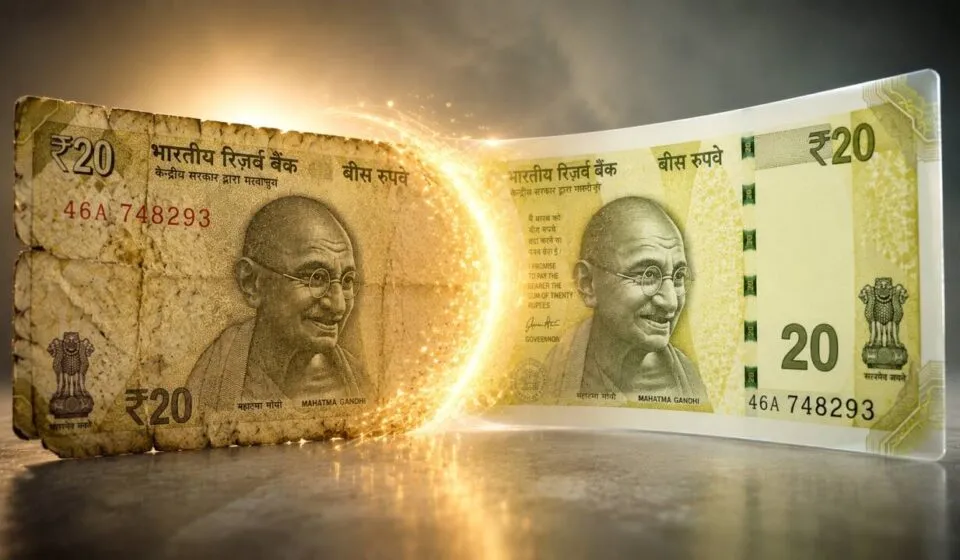

India is on the cusp of a significant transformation in its monetary landscape, as the Reserve Bank of India (RBI) prepares to introduce the nation’s first-ever polymer (plastic) banknotes. In a landmark decision, the government has granted authorization for the RBI to commence field trials, beginning with the issuance of up to two billion plastic notes. These initial trials will focus on the Rs 10 and Rs 20 denominations, with one billion notes of each value slated for circulation to assess their performance and public acceptance.
This move signifies a cautious yet forward-thinking approach to currency management, aiming to harness the advanced properties of polymer technology. While the immediate plan is for a controlled trial, the initiative opens a new chapter for India’s currency, potentially addressing long-standing issues associated with traditional paper banknotes.
The Rationale Behind Polymer Notes
The decision to explore polymer currency is not arbitrary; it stems from a global trend and a desire to enhance the durability, cleanliness, and security of banknotes. Traditional paper notes, primarily made from cotton rag, are susceptible to wear and tear, especially in a country like India with high circulation volumes and diverse climatic conditions. This leads to frequent replacement cycles, incurring substantial costs for the central bank.
Polymer notes, typically manufactured from biaxially oriented polypropylene (BOPP), offer a superior alternative. Their non-porous surface makes them resistant to moisture, dirt, and oil, significantly extending their lifespan. This inherent resilience translates into economic benefits, as the notes last considerably longer in circulation, reducing the frequency and cost of printing new currency.
A Global Perspective: The Polymer Precedent
India’s venture into plastic currency follows a path blazed by several other nations worldwide. Australia was a pioneer, introducing polymer banknotes in 1988 and fully converting its currency by 1996. Its success paved the way for other major economies to adopt the technology.
Today, countries such as Canada, the United Kingdom, New Zealand, and Vietnam, among many others, have successfully transitioned to or partially adopted polymer currency. Their experiences have largely been positive, reporting reduced counterfeiting, lower replacement costs, and improved hygiene. The global adoption provides a robust framework and lessons learned for India as it embarks on its own trials.
Key Benefits of India’s Polymer Initiative
The introduction of polymer notes in India is anticipated to bring a multitude of benefits, addressing some of the persistent challenges faced by the current paper currency system.
Enhanced Durability and Longevity
One of the primary advantages of polymer notes is their exceptional durability. They are far more resistant to folding, tearing, and general wear than paper notes. In a country like India, where currency exchanges hands frequently and often in demanding environments, this longevity is crucial. A longer lifespan means fewer notes need to be printed, leading to significant savings in production and distribution costs for the RBI over time.
Improved Hygiene and Cleanliness
Unlike porous paper, polymer notes have a smooth, non-absorbent surface. This makes them resistant to dirt, moisture, and even some chemicals, making them inherently more hygienic. In a post-pandemic world, the ability of currency to remain cleaner for longer periods is an added health benefit, reducing the accumulation and transmission of microbes.
Advanced Security Features
Polymer material allows for the integration of highly sophisticated security features that are difficult to replicate in paper. These can include transparent windows, intricate holographic elements, and advanced micro-printing, making polymer notes significantly harder to counterfeit. This enhanced security is vital for maintaining public trust in the currency and combating illicit financial activities.
Reduced Environmental Impact (Long-Term)
While ‘plastic’ might raise immediate environmental concerns, the extended lifespan of polymer notes can lead to a reduced environmental footprint in the long run. Fewer notes needing to be produced means less energy and fewer raw materials consumed in the manufacturing process. Furthermore, some polymer notes are designed to be recyclable at the end of their life, offering a more sustainable end-of-life solution compared to paper notes which often end up in landfills or are incinerated.
The Trial Phase: A Strategic Assessment
The RBI’s decision to initiate field trials with specific denominations—Rs 10 and Rs 20—is a strategic move. These denominations are among the most frequently exchanged in daily transactions, making them ideal candidates to test the polymer notes’ resilience and public acceptance across diverse socio-economic strata and climatic regions.
During the trial period, the RBI will meticulously evaluate several critical aspects:
- Durability under varied conditions: Assessing how the notes withstand different temperatures, humidity levels, and handling practices across India’s vast geography.
- Public acceptance and tactile feel: Understanding how citizens adapt to the distinct feel and appearance of plastic notes compared to familiar paper currency.
- Compatibility with existing infrastructure: Ensuring that vending machines, ATMs, and cash processing equipment can handle the new notes without issues.
- Counterfeiting resistance: Monitoring the effectiveness of integrated security features in real-world scenarios.
The insights gathered from these trials will be crucial in determining the feasibility and potential scope of a broader rollout. The government has clearly stated that there is currently no proposal to entirely replace paper currency, underscoring the cautious, evidence-based approach being adopted.
Challenges and Considerations
While the benefits are compelling, the transition to polymer notes is not without its considerations. The initial production costs for polymer notes can be higher than those for paper. There might also be a period of public adjustment to the new texture and handling characteristics of the notes. Furthermore, establishing a robust recycling infrastructure for end-of-life polymer notes will be essential to fully realize their environmental advantages.
Conclusion
India’s move to introduce its first plastic banknotes marks a progressive step in modernizing its currency system. By leveraging the proven advantages of polymer technology—including enhanced durability, hygiene, and security—the RBI aims to create a more efficient and robust monetary infrastructure. The upcoming field trials for the Rs 10 and Rs 20 denominations will serve as a vital crucible, providing invaluable data to guide future decisions. This cautious yet ambitious initiative reflects India’s commitment to innovation, balancing the imperative for a resilient currency with practical considerations, and ultimately paving the way for a more advanced financial future.